The Brain Injury Services Coordination (BISC) Unit, located within DARS' Division for Community Living in the Richmond Central Office, serves as a point of contact for internal and external customers seeking general or agency-specific information about brain injury resources. BISC manages over $6 million in programs, contracts, and federal grants involving brain injury services throughout the Commonwealth. As part of its oversight responsibility of nine state-funded Brain Injury Services (BIS) Programs, DARS prepares an annual report on number of people served by each program; types of services provided; and success in attracting nonstate resources. DARS also maintains the BIS Programs SCORECARD which reports quarterly data on how the state-funded programs are helping consumers achieve their personal goals, as well as the number and nature of community awareness and education events conducted by each program. BISC Unit also manages the Commonwealth Neurotrauma Initiative (CNI) Trust Fund, the Brain Injury Discretionary Services (BIDS) Fund, and provides staffing for the Virginia Brain Injury Council (VBIC). DARS was awarded a three-year (2018-2021) federal TBI Act systems change grant, Project REACT (Realizing Enhanced Access and Community Ties). Federal grant activities are carried out through a contract with the Brain Injury Association of Virginia, which is managed by the Brain Injury Services Coordination Unit.
The BISC Unit works closely with other CBS Division programs, particularly the Community Rehabilitation Case Management Services Program and the Personal Assistance Services Program, to provide services and resolve customer concerns regarding agency services for persons with brain injury. The Brain Injury Services Coordination Unit also works collaboratively with DARS' Vocational Rehabilitation Program when serving consumers who have a vocational goal. The BISC Unit and staff from Wilson Workforce and Rehabilitation Center (WWRC) are available to provide support, guidance, and technical assistance to DARS field staff and agency administration regarding the rehabilitation of persons with acquired brain injury. Sponsorship funding through BISCU is available each year for a limited number of DARS and WWRC staff to receive specialized training in brain injury through workshops, courses, webinars, and conferences. The BISC Unit partners with consumers, advocacy groups, state agencies, and other community entities to improve services and resources for Virginians with brain injury.
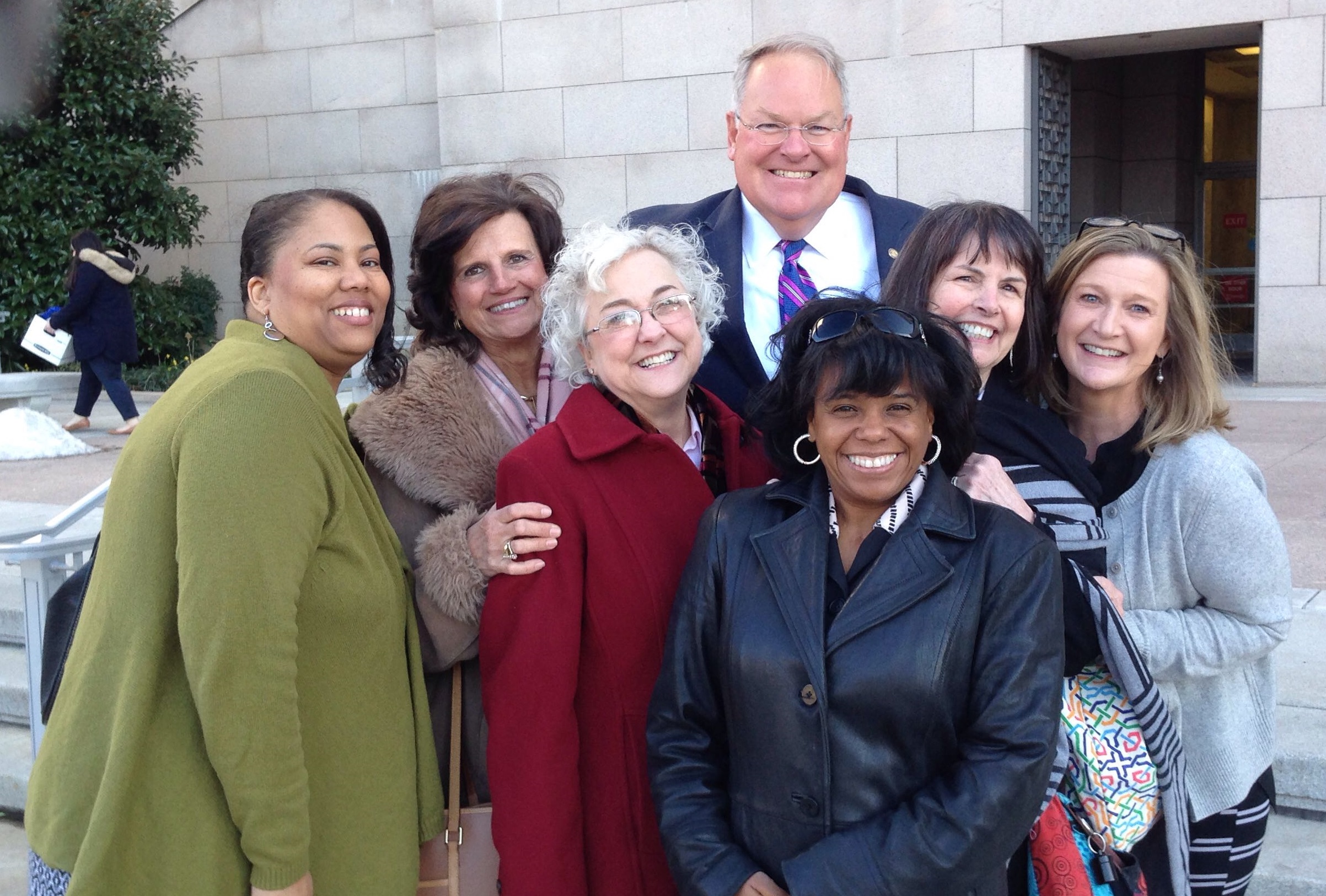
Former Secretary of Health and Human Services ran into members of Virginia's brain injury community during Congressional Brain Injury Task Force on Capital Hill: Mae Johnson, Karen Brown, Anne McDonnell, Kelli Gary, Patti Goodall, Krystal Thompson.
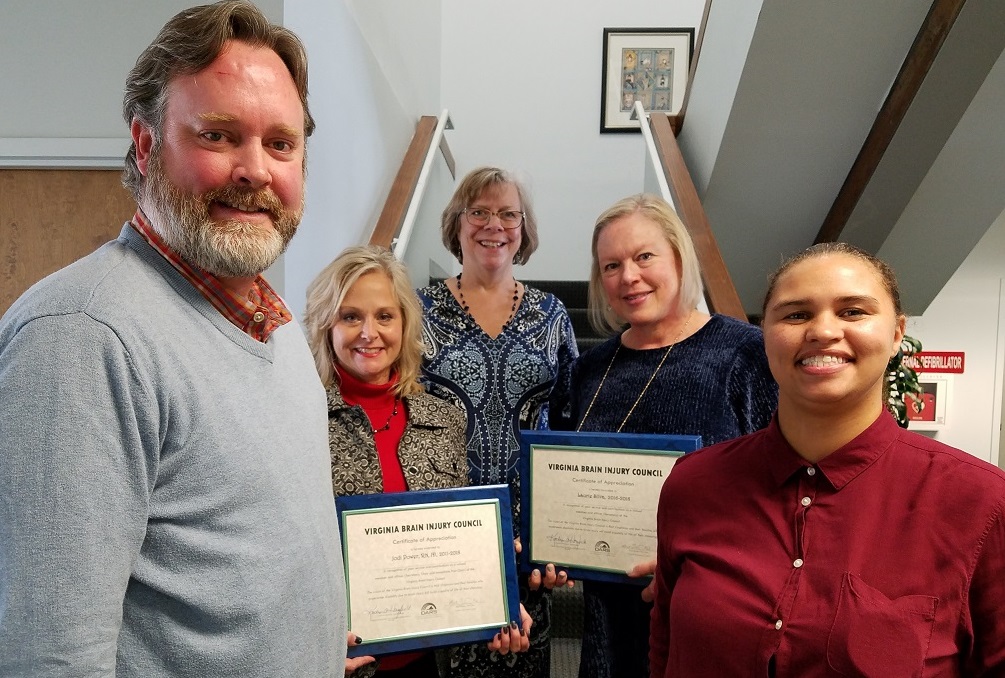
DARS Commissioner Kathryn Hayfield (center, back) thanks outgoing Virginia Brain Injury Council members for their years of service: Mark Bender, Jodi Power, Laurie Silva, Shasmin Asbury.
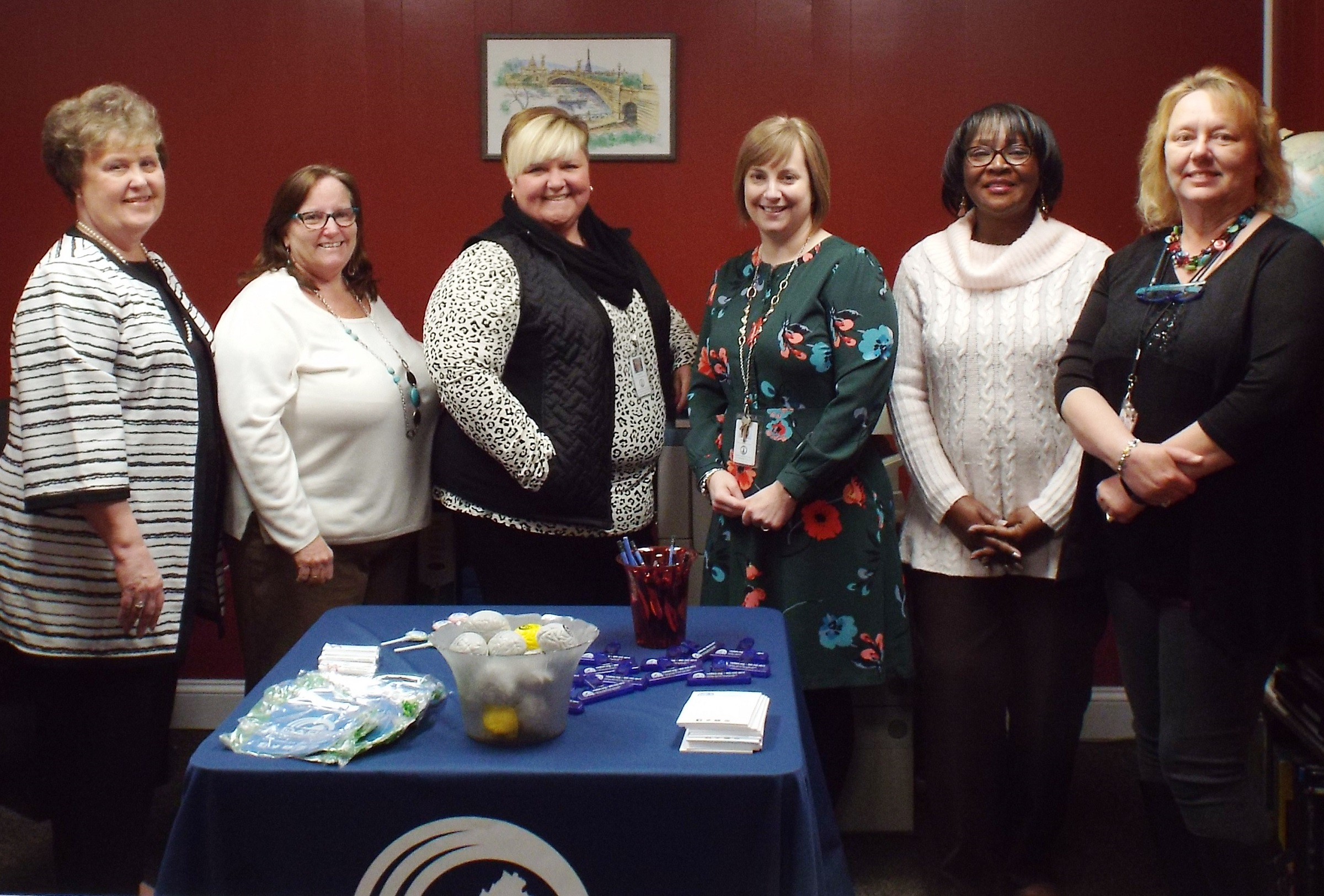
No Limits Eastern Shore Open House attended by DARS staff (Left to right) :
Eleanor Williams, Robin Sexauer, Bonnie Gill, Teri Nunley, Idena Bailey and Wanda Allen.
The Department for Aging and Rehabilitative Services recognizes that deficits in non-vocational life areas may adversely affect the ability of a person with a brain injury to gain and/or maintain employment.
Community providers throughout the State are partially funded by the Department for Aging and Rehabilitative Services through State General Funds to provide Community Support Services. These services involve intensive one-to-one education and training to assist a person with a brain injury to live and participate as independently as possible in home, work, and community settings of their choice. Funded providers submit quarterly reports of how they are serving providers with brain injury in the following areas:
By proclamation of Governor Northam, the Commonwealth of Virginia has declared March 2019 as Brain Injury Awareness Month in Virginia. During March and throughout the year, brain injury related awareness and educational activities take place across the state. These events are generally open, targeting the general public, community leaders, healthcare professionals, and survivors / family members. Please see the brain injury calendar of events in our document repository. If you have questions about a specific activity, please contact the person listed specifically for that event. If you have general questions, contact Donna.Cantrell@dars.virginia.gov for more information. Support Brain Injury Awareness by attending, participating or sponsoring awareness / education events!
Find a list of activities here.
In January 2014, the Virginia Commonwealth University Survey Evaluation and Research Laboratory (SERL) completed a statewide assessment of the needs of people with brain injury and their family members / caregivers, as well as available resources. The survey involved a written questionnaire for survivors; one for family members / caregivers; and one for professionals. Approximately 600 people participated in the assessment process. Survey information collected by SERL is treated confidentially: neither DARS nor SERL will share any personal information such as name or address in the final report. You can view a PowerPoint presentation highlighting the most significant findings of the assessment process here.
An Executive Summary of the Needs and Resources Assessment is available for further information.
Thank you for your interest in the DARS statewide Brain Injury Needs & Resources Assessment!
The survey is supported by Grant Number 6 H21MC06763-05-02 awarded to the Virginia Department for Aging and Rehabilitative Services by the U.S. Department of Health and Human Services, Health Resources and Services Administration. Its contents are solely the responsibility of the authors and do not necessarily represent the official views of the Department of Health and Human Services.
The Department for Aging and Rehabilitative Services' (DARS) and the Brain Injury Association of Virginia (BIAV) sponsored its Annual Caregiver Forum on November 3, 2018 at the Double Tree by Hilton Charlottesville, VA. This event was designed for non-paid caregivers, such as parents, spouses and friends who play a significant role in the day to day life of someone who has had a brain injury. This specially designed day included education on topics related to care giving, community resources, coping skills, self-care and time for networking with others. The 2018 Annual Caregiver Forum was a Huge Success!
If you have questions, please contact the Brain Injury Association of Virginia (BIAV) at debra@biav.net or contact Donna Cantrell, Federal Grant Program Specialist, DARS Brain Injury Services Coordination Unit, at donna.cantrell@dars.virginia.gov.
The Caregiver Forum is an educational activity of DARS' Federal Traumatic Brain Injury (TBI) Implementation Partnership Grant. It provides an opportunity for DARS and the Brain Injury Association of Virginia (BIAV), the primary subcontractor on DARS' federal grant, to share educational resources for caregivers of family members with acquired brain injury, as well as teach participants how to recognize and deal with caregiver-related stress.
The Virginia Brain Injury Council and the Department for Aging and Rehabilitative Services (DARS) held another successful Brain Injury Report Out Day on Friday, July 28, 2017 at the University of Richmond, Jepson Alumni Center. The theme of this year’s Brain Injury Report Out Day, a biennial event, was “Hidden Injury,” focusing on mild brain injuries/concussions and the difficulties, both for professionals and individual survivors, that these so-called mild injuries can present. Approximately 100 participants attended the event, which was well-represented by state agencies, private providers, state-funded providers, survivors, family members/caregivers, and other interested professionals and citizens. Feedback from participants was extremely positive, and most noted the opportunity to provide input into Virginia’s State Action Plan for Brain Injury Services as a highlight of the day!
John Corrigan, Ph.D. of Ohio State University and Gregory O’Shanick, M.D. of Center for Neurorehabilitation Services, presented on the challenges of determining the prevalence of brain injury among the general population, and of working with medical professionals to properly screen / diagnose individuals (copies of PPT presentations are available upon request). A brief “first person experience” luncheon keynote was delivered by Raighne “Renny” Delaney, a Northern Virginia lawyer who sustained multiple concussions; Renny also serves on the Virginia Commonwealth Neurotrauma Initiative Trust Fund Advisory Board. Mr. Delaney spoke about the many challenges he faced following multiple concussions, including the frustration of dealing with uninformed and sometimes-unresponsive insurance companies and physicians.
Two awards were presented during the working lunch. The Virginia Brain Injury Council presented its Brain Injury Champion Award to Delegate Chris Peace for his efforts on behalf of Virginians with brain injury; Del. Peace said a few words to attendees after accepting the award. Commissioner Rothrock also presented his Toggle Award (via speaker phone!) to Karen Brown, recently retired executive director of Brain Injury Services, Inc. in Springfield (Karen was recognized for the work that BIS INC has done over the years to serve veterans in the Northern Virginia area). The highlight of the day was the afternoon work session on the Virginia’s State Action Plan for Brain Injury Services. Cynthia O’Donoghue, Ph.D. and Cara Meixner, Ph.D. of James Madison University facilitated small working group sessions during which attendees were tasked with providing input into DARS’ state plan to address the ongoing needs of people with acquired brain injury. Information gathered during this session will become part of the final Virginia State Plan for Brain Injury Services which should be completed in late Fall, 2017. All in all, this was an informative, enjoyable, productive Brain Injury Report Out Day, and DARS looks forward to sponsoring the next one in 2020!
A final draft of Virginia’s State Action Plan for 2009-2013 was presented to the Virginia Brain Injury Council at its April 23, 2010 meeting. Council members voted unanimously to accept the final draft of the full Action Plan document. Copies are posted on both the DARS and BIAV websites, and the Action Plan will also be disseminated among consumers, family members, professionals, and other stakeholders.
The Virginia Brain Injury Council (VBIC) serves as the advisory body to a federal Traumatic Brain Injury (TBI) Act grant awarded to the Virginia Department for Aging and Rehabilitative Services (DARS), the lead agency in Virginia for the coordination of brain injury services. A 1998-2000 federal TBI Act "Planning Grant" required DARS to develop an "action plan" to guide the statewide development of brain injury services. DARS, in partnership with the Brain Injury Association of Virginia (BIAV) and Virginia Commonwealth University (VCU) Health Systems, developed the 2000-2005 Traumatic Brain Injury (TBI) State Action Plan. DARS received additional funding through a TBI Act "Implementation Grant" and in Spring 2005 formed a Steering Committee to oversee the process of updating Virginia's 2005 Action Plan, one of the goals of the Federal TBI grant. Representatives from the Virginia Brain Injury Council (VBIC), the Brain Injury Association of Virginia (BIAV), the Commonwealth Neurotrauma Initiative (CNI) Trust Fund Advisory Board, and the Virginia Alliance of Brain Injury Service Providers (VABISP) developed a work plan to carry out this important activity. The Virginia Brain Injury Council endorsed the Steering Committee's work plan.
During 2005, DARS hosted several Brain Injury Town Meetings across the state and invited survivors, family members, professionals, and other stakeholders to participate. The Town Meeting process allowed facilitators to receive feedback on the development of "core" or foundational brain injury services; to identify and prioritize local service needs; and to share information on developing and enhancing services within the local community. (See link to 2005 Town Meetings below for more information on Virginia’s three “core” services: Case Management; Clubhouse/Day Programs; and Regional Resource Coordination.) DARS partnered with the Brain Injury Association of Virginia (BIAV) http://www.biav.net and with the Virginia Commonwealth University (VCU) Rehabilitation Research & Training Center to conduct the Town Meetings and prepare a report of its findings. The Steering Committee reviewed the findings in 2006 and revised the work plan, which was again endorsed by the Virginia Brain Injury Council.
In 2007, DARS invited Susan Vaughn, Director of Public Policy for the National Association of State Head Injury Administrators (NASHIA), to provide an overview of other states' advisory councils and statewide actions plans at the January 2007 meeting of the Virginia Brain Injury Council. DARS also hired Ann Deaton, Ph.D., a neuropsychologist, to research, develop, and prepare a written draft of Virginia's Brain Injury State Action Plan for 2007-2011. Dr. Deaton developed and distributed a survey to solicit input from stakeholders; she also conducted numerous in-depth telephone interviews. Based on Dr. Deaton’s draft document, in 2009 DARS and BIAV developed a State Action Plan Executive Summary, as well as a consumer-friendly State Action Plan Booklet with background information and an overview of the Plan’s three target areas.
The full Virginia Brain Injury Action Plan 2009-2013, the Executive Summary
of the Action Plan, and the Action Plan Booklet are available below. Background
information on Virginia's 2005 and 2007 State Traumatic Brain Injury (TBI)
Action Plans are also available, including the 2005 Town Meetings: Final Report
and a Survey to Gather Data for the Brain Injury State Action Plan in Virginia
2007-2011.
For additional information regarding the Virginia Brain Injury Council or Virginia’s State Action Plan 2009-2013, please e-mail Patti.Goodall@dars.virignia.gov or call (804) 662-7615 or (800) 552-5019. You may also contact the Brain Injury Association of Virginia at (804) 355-5748 or visit their website at https://www.biav.net .
The challenge of caring for individuals with acquired brain injuries, particularly individuals with neurobehavioral challenges, has been a topic of concern for decades, not only in Virginia but across the nation. In 2014, as part of Virginia's federal Traumatic Brain Injury Grant, the Department for Aging and Rehabilitative Services (DARS) contracted with James Madison University (JMU) through the Commonwealth Neurotrauma Initiative (CNI) Trust Fund to conduct a comprehensive study on "Access to Neurobehavioral Services in Virginia" for individuals with acquired brain injury. Learn more and read the executive summary and the paper by visiting the Virginia Brain Injury Council page.
DARS recognizes that deficits in non-vocational life areas may adversely affect the ability of individuals to gain and/or maintain employment. Community Support Services (CSS) involve intensive one-to-one education and training to assist someone to live and participate as independently as possible in home, work, and community settings of choice. Services may include education, life skills training, assessment and instruction related to the use of assistive technology, as well as the development and implementation of strategies and techniques to help a person to function successfully in community settings. Areas targeted for Community Support Services may include household and financial management, personal care/hygiene, coping and social skills, using transportation, and other similar skills and tasks. When working with a person with a brain injury, Community Support Services typically focus on the development and implementation of compensatory strategies versus the retraining of cognitive skills.
The Brain Injury Services Coordination Unit encourages organizations and individuals to apply for vendorship approval to provide Community Support Services to DARS customers served by the Vocational Rehabilitation Program, as well as those served by programs within the Division for Community Living Division. Although Community Support Services may be paid for by a Vocational Rehabilitation counselor in certain situations, services are often provided to individuals with brain injury through the Brain Injury Direct Services (BIDS) Fund managed by the Brain Injury Services Coordination Unit. CSS vendorship information and application materials are available in the DARS Document Repository under "Brain Injury Services Forms." For more information, contact Patti Goodall at Patti.Goodall@dars.virginia.gov or 800-552-5019 (voice) or 800-464-9950 (TTY).
Virginia Department of Health
Center for Injury & Violence Prevention
http://www.vahealth.org/civp/datacivp.asp
.
Traumatic Brain Injury National Database Center
http://www.tbindc.org/
Centers for Disease Control and Prevention (CDC)
Traumatic Brain Injury:
https://www.cdc.gov/traumaticbraininjury/index.html
Brain Injury Association of America (BIAA)
https://www.biausa.org
Brain Injury Association of Virginia (BIAV)
http://www.biav.net
Virginia Commonwealth University Traumatic Brain Injury Model System
http://model.tbinrc.com/